
A pancake rises for two reasons and collapses for about six. The rising is simple chemistry: baking powder and baking soda make carbon dioxide, the bubbles get trapped in the batter, and heat expands them until the structure sets around the gas. Everything else that decides whether you get a tall, cloud-textured pancake or a flat, leathery one happens in how you handle the batter between the bowl and the pan.
Almost every flat pancake at home comes from one of three things. The batter was mixed until smooth, which builds gluten and turns a tender crumb rubbery. It went into the pan immediately, so the flour had not absorbed the liquid and the leavening had not started. Or the pan was too hot, which browns the outside before the inside has had time to rise, sealing the pancake at half its potential height. None of those is a recipe problem. They are all timing and temperature.
This recipe is built around fixing all three. The batter is deliberately lumpy and stays that way. It rests for fifteen minutes, which is long enough for the flour to hydrate and the gluten you did develop to relax, and short enough that the baking soda has not spent its lift. And it cooks on medium-low heat, slower than most people cook pancakes, so the interior has time to expand fully before the surface sets.
The liquid is buttermilk rather than milk, and that is doing more than adding tang. Its acidity reacts with the baking soda for extra lift, and it weakens gluten as it goes, so the same flour produces a softer crumb. It also thickens the batter, and a thick batter is the single most visible difference between a pancake that mounds up in the pan and one that spreads into a thin disc.
What you end up with is a stack that stands about half an inch tall per pancake, tears rather than cuts, and holds syrup instead of going soggy under it. There is also an optional step at the end for anyone who wants them taller still, which trades five extra minutes for noticeably more height.
Why This Recipe Works
Nothing here is unusual. What matters is which small things you get right, and these are the ones that actually change the pancake:
- •Buttermilk with baking soda, not just milk with baking powder. The acid in buttermilk reacts with the soda immediately for a second source of lift, and it tenderises the crumb at the same time by weakening gluten.
- •The batter stays lumpy. Flour lumps disappear on their own in the pan. Mixing them out builds a gluten network that makes pancakes chewy and holds them down, and it is the most common single reason home pancakes turn out tough.
- •Fifteen minutes of rest. The flour finishes absorbing liquid, the gluten you did develop relaxes, and the baking powder starts producing bubbles before the batter ever meets heat. You can see the difference: rested batter is visibly thicker and pocked with bubbles.
- •A thick batter, thick enough to mound on the spoon. Thin batter spreads across the pan and no amount of leavening will make a thin disc tall. If it runs off the spoon in a stream, it is too thin.
- •Medium-low heat rather than medium-high. The inside of a pancake needs about two minutes to rise. Cook it hot and the outside browns and sets in half that, which caps the height and leaves the middle dense.
- •Melted butter that has cooled slightly. Hot butter starts cooking the eggs on contact and can seize into flecks when it hits cold buttermilk. Cooled melted butter blends in cleanly and carries flavour through the whole crumb, not just the surface.
- •One flip, and never a press. Every pancake recipe says this and it is still the easiest mistake to make. Pressing with the spatula pushes the gas out of a structure that has not set yet, and the pancake will not recover.
- •Leavening that is actually still alive. Baking powder loses strength on the shelf, and a tin that has been open a year will produce a flat pancake no matter what else you do right. Testing it takes ten seconds and is the first step below.
How to Make It
Two bowls, mixed separately. Dry whisked hard, wet whisked until even. Doing the work in both bowls first is what lets you barely mix once they meet.

Lumpy is correct. Ten to fifteen folds and stop. Visible lumps and a few dry streaks are the target, not a fault. A smooth batter means gluten, and gluten means chewy and flat.
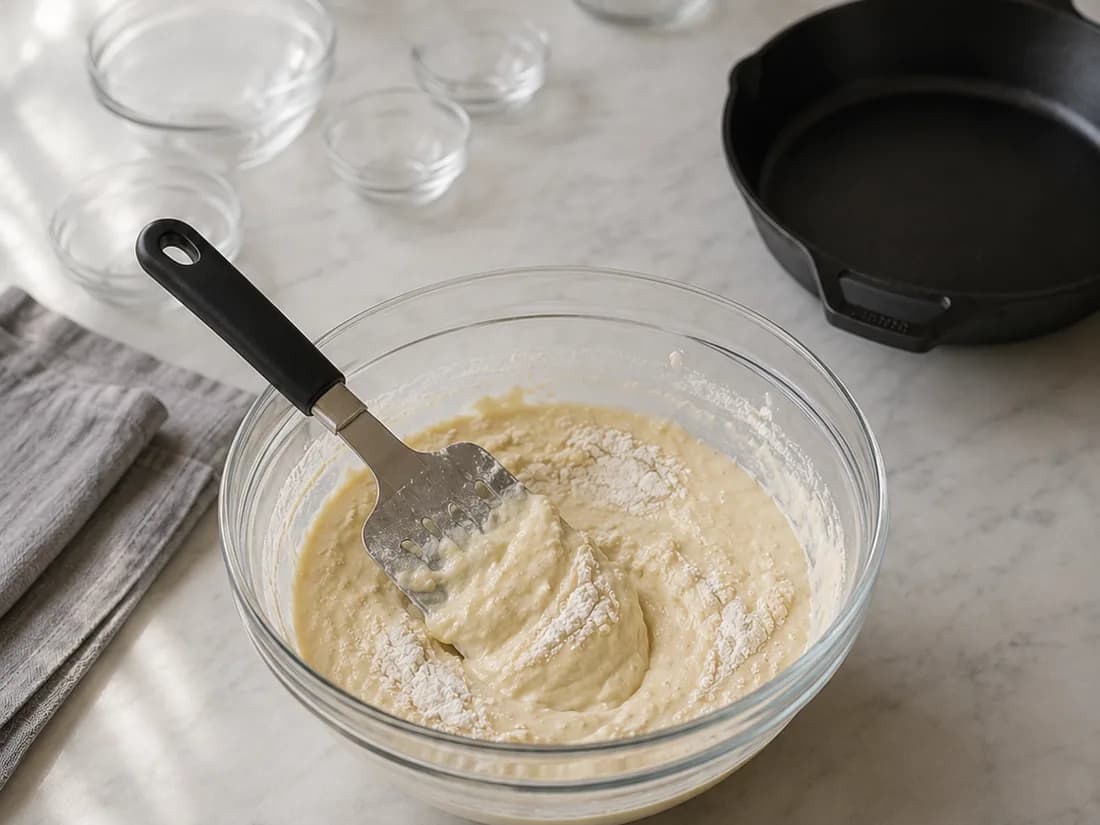
Rested batter mounds in the pan. After fifteen minutes the batter is thick enough to sit up where it lands instead of running out to the edges of the pan. That thickness is the height.
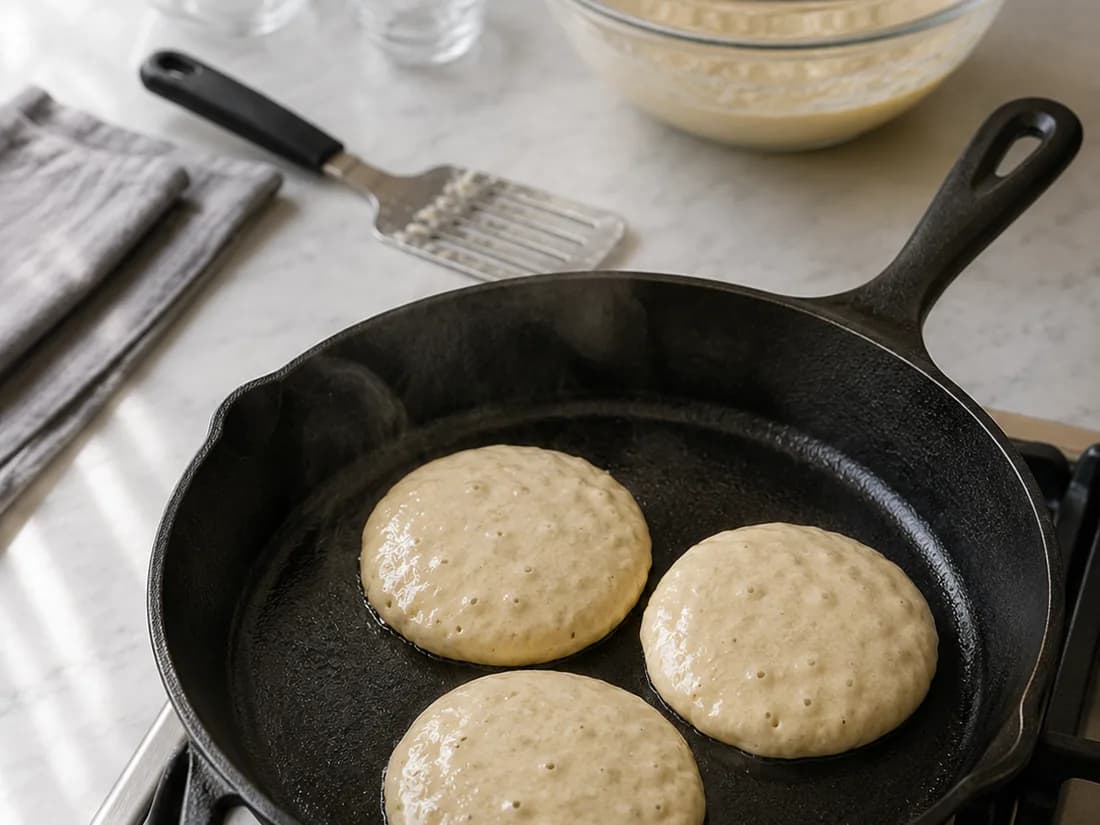
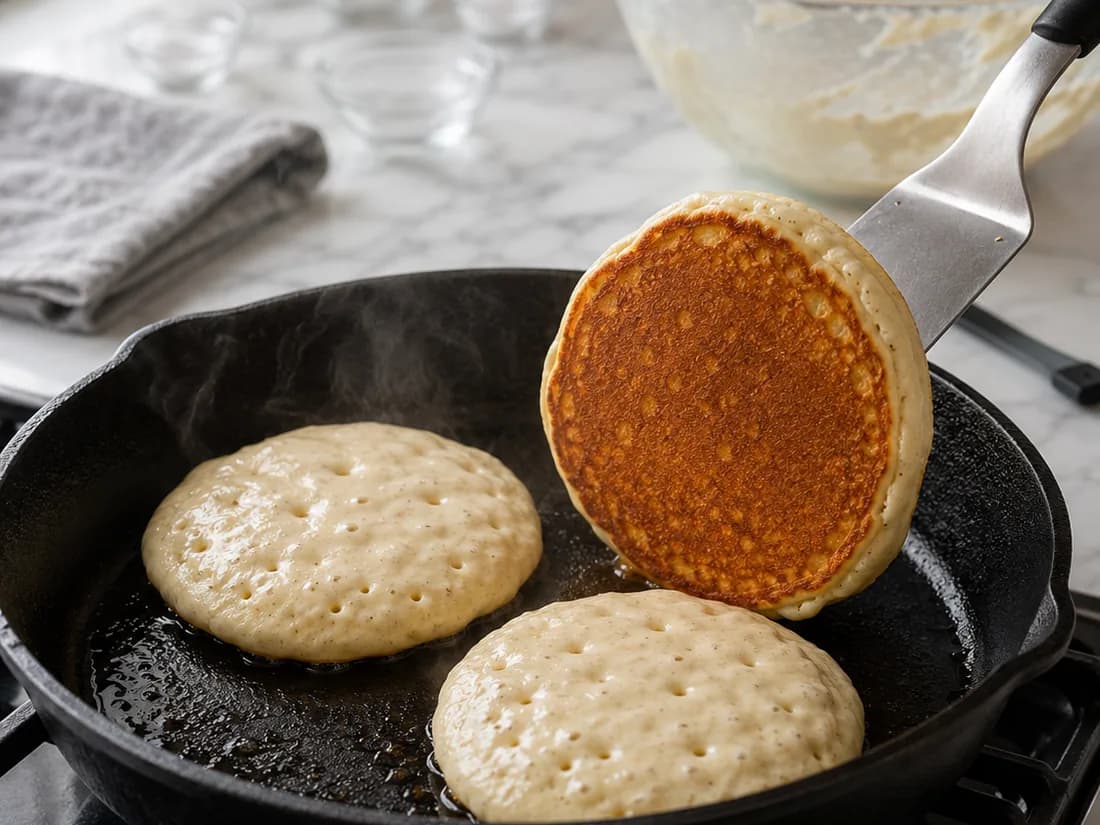
One flip, no pressing. Bubbles popping and matte edges mean ready. Turn it once, leave it alone, and resist flattening it with the spatula.
Tips for the Best Results
- •If your first pancake comes out pale and greasy, that is normal; the pan is still finding its temperature and holding too much fat. Wipe it out, let it sit another minute, and the second one will be right. Everyone sacrifices the first pancake.
- •Dark, almost burnt outside with a doughy middle is always heat, not timing. Turn it down further than feels right. Medium-low on most stoves is where pancakes want to be.
- •For pancakes of the same size every time, use a quarter-cup measure or an ice cream scoop rather than a ladle. Consistent volume means they finish cooking together.
- •Do not double the baking powder to chase more height. Past about a teaspoon per cup of flour it stops helping and starts tasting metallic, and the structure gets so open the pancake collapses as it cools.
- •Blueberries and chocolate chips should go onto the surface after the batter hits the pan, not into the bowl. Folded through the batter they need more mixing, they sink, and they burn on the pan.
- •The batter thickens as it sits. If the last few pancakes are too stiff to spread at all, loosen with a tablespoon of buttermilk, folded in gently.
- •A cast-iron pan gives the most even colour but needs a longer preheat and a lower flame than non-stick. Give it five minutes before the first pancake.
- •Cooking for a crowd is a rack-in-a-low-oven job, not a stack-on-a-plate job. It is the difference between serving twelve good pancakes and serving four good ones and eight damp ones.
- •If you want them tangier, use all buttermilk and drop the vanilla. If you want them more like a diner pancake, keep the vanilla and add a quarter teaspoon of ground nutmeg to the dry mix.
Make Ahead & Storage
Cooked pancakes keep in the fridge for three days in an airtight container, with baking paper between the layers so they do not fuse. They freeze better than almost anything else at breakfast: cool them completely on a rack, freeze flat on a tray until firm, then bag them, and they hold for two months without sticking together. Reheat from the fridge in a toaster, or from frozen in a 350F or 180C oven for about eight minutes; a microwave works but makes them rubbery within seconds of finishing. Raw batter is the one thing not to keep. The leavening is spent within an hour or two, and refrigerating it overnight gives you a pancake noticeably flatter than the ones you made the day before, which is why this batter is mixed to be cooked.
What to Serve It With
Warm maple syrup and salted butter is the version that needs no argument. Beyond that, they take fruit better than most breakfast breads: macerated strawberries, sliced banana with a little brown sugar, or a spoon of thick yoghurt against the syrup. If you are building a full plate, they sit well next to something salty and crisp such as streaky bacon or a fried egg, because the pancakes themselves are only lightly sweet.